An expectant silence hangs over the pukaha bird sanctuary as hundreds of spectators await a glimpse of a rare white kiwi, a bird held sacred by New Zealand's indigenous Maori people.
A collective sigh follows his unveiling to the crowd, although this appears to be prompted more by the chick's cute appearance than any mystical qualities.
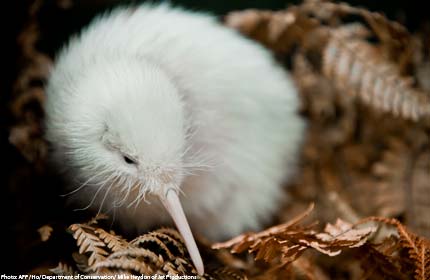
Resembling a fluffy white tennis ball with an elongated beak and stout, three-toed feet, the white kiwi has become a symbol of New Zealand's efforts to prevent its emblematic national bird from becoming extinct.
The male chick, named Manukura meaning "of chiefly status" in Maori hatched on May 1 at the sanctuary north of Wellington, becoming the first white kiwi ever born in captivity.
Pukaha's field centre manager Kathy Houkamau said the chick had sparked unprecedented interest in the programme to save the flightless bird species, which is threatened by introduced predators such as stoats, rats and ferrets.
The Department of Conservation, which runs the sanctuary, estimates there are fewer than 70,000 left in New Zealand, and several sub-species are listed as critically endangered."He's not albino, he's got a recessive gene that makes him completely white," sanctuary ranger Tom Studholme said.
"We don't know when they're going to appear, we could get another next year or there might not be another white kiwi for 50, 100 years."
"Culturally, it meant a lot for the local iwi (tribe)," he said, explaining that tribal elders held a ceremony to bless the bird shortly after its birth.The adult birds roam free and any eggs that are produced are collected and brought to a kiwi nursery, where the chicks are cared for until they are big enough to be released into the forest.
There are doubts about whether Manukura will ever be released into the wild because of fears his white plumage marks him as an easy target. "If you're white and you're in the bush at night, you could be at greater risk," says captive breeding ranger Darren Page.
Still, Manukura may face a lifetime in Pukaha's kiwi nursery, where Houkamau says visitor numbers have doubled in the past two months on those days where he is made available for viewing.
"I do think of the world in terms of before Manukura and after Manukura," Houkamau said.
"I guess the arrival of a white chick changed everything here, we suddenly had an international celebrity on our hands and everyone wanted to see him."ORIGINAL SOURCE
Content used in this not-for-profit blog remain the property of their respective owners.


No comments:
Post a Comment